Topical NAC for Acne-Prone Skin: Promising Ingredient or Premature Hype?
An evidence-led guide to topical N-acetylcysteine in cosmetics for acne-prone and blemish-prone skin, including clinical evidence, formulation limits, safety, and better-established alternatives.
8 min read By Dr. Lurié
NAC has a plausible story — and a much smaller evidence base
N-acetylcysteine, usually shortened to NAC, is beginning to appear in skin-care conversations as an antioxidant, anti-inflammatory ingredient and possible option for blemish-prone skin.
The interest is not invented. NAC contains a reactive thiol group, is linked to glutathione biology, and has been studied in topical acne formulations. But topical NAC is not yet a routine, guideline-backed acne active. A promising mechanism and a few clinical studies do not make it interchangeable with established treatments.
That distinction matters if your skin is already irritated, breaking out or prone to post-inflammatory marks. The useful question is not “Is NAC good?” It is “What exact product was tested, for which type of acne, against what comparison, and does the cosmetic in front of me resemble it?”
What topical NAC is supposed to do
NAC is an acetylated form of cysteine. In laboratory and medical research, it is discussed for its antioxidant and redox effects, its relationship to glutathione, and its ability to disrupt some disulfide bonds.
For acne-prone skin, researchers have proposed several possible routes: effects on oxidative stress and inflammatory signalling, changes in sebaceous activity, and interference with bacterial biofilms. These are hypotheses that help explain why NAC is being studied. They do not prove that every NAC serum or cream will clear acne.
Route matters. Evidence about oral NAC supplements, prescription acetylcysteine or a related experimental molecule cannot automatically be transferred to a topical cosmetic. The vehicle, concentration, pH, packaging and stability of the finished formula can change what reaches the skin and how well it is tolerated.
The direct acne evidence is encouraging but still thin
The most directly relevant older trial enrolled 99 people and compared a 5% acetylcysteine gel with placebo in a double-blind design. The NAC gel produced a statistically greater reduction in comedone counts. This is a useful signal, particularly for clogged pores, but one study does not establish how NAC compares with modern acne routines across different ages, skin tones and acne severities.
A small 2026 randomized trial studied 40 people with moderate acne. Both groups also received oral doxycycline: one used topical 5% NAC and the other used 5% benzoyl peroxide. The NAC group improved more on several acne measures and one participant reported mild scaling. The result is interesting, but the trial was small and NAC was tested as part of an antibiotic regimen—not as a stand-alone cosmetic serum.
Laboratory studies also report effects on Cutibacterium acnes biofilm formation. Laboratory activity can support a research rationale, but it does not tell us whether a retail product will remain stable, penetrate appropriately or produce a meaningful visible benefit.
Do not confuse NAC with NAC-GED
You may also encounter impressive acne data for N-acetyl-GED-0507-34-LEVO, often shortened to NAC-GED. In a 450-person phase IIb trial, a 5% NAC-GED gel improved total lesion counts and investigator-rated success compared with vehicle over 12 weeks.
Despite the similar initials, NAC-GED is a different investigational molecule designed to modulate PPAR-gamma. Its trial results are not evidence that ordinary N-acetylcysteine cosmetics will perform the same way.
This naming trap is especially important in marketing. If a product page cites an acne study, check whether the tested ingredient is actually N-acetylcysteine, whether the concentration and vehicle match, and whether the study evaluated the finished product being sold.
Why a well-formulated product matters more than the ingredient name
NAC is not an easy ingredient to place in a pleasant cosmetic. Its sulfur chemistry can produce a noticeable odour, and oxidation or an unsuitable vehicle can reduce stability. Recent formulation work has focused as much on physical stability, sensory qualities and tolerability as on theoretical antioxidant activity.
That means an ingredient list alone cannot tell you whether a product delivers useful NAC to the skin. A credible manufacturer should be able to explain the NAC concentration, packaging, stability testing, recommended storage and tolerability testing of the finished formula.
Be cautious with products that rely only on words such as detox, cellular defence, purification or glutathione support. Those phrases describe a story around the ingredient; they are not measurements of fewer comedones, fewer inflamed lesions or less post-acne discoloration.
Where topical NAC might fit — and where it does not
A topical NAC product may be reasonable as an optional experiment for an adult with mild blemish-prone or comedonal skin who understands that the evidence is preliminary. It makes more sense when the formula is transparent, stable, simple and introduced without changing the rest of the routine at the same time.
NAC should not be presented as a replacement for acne treatments with stronger guideline support. Current American Academy of Dermatology guidance includes benzoyl peroxide, topical retinoids, topical antibiotics, clascoterone, salicylic acid and azelaic acid among recommended topical options. NAC is not included in that list.
If acne is painful, deep, rapidly worsening or leaving scars, experimenting with an emerging cosmetic can cost time. A clinician can help identify whether the problem is acne, rosacea, folliculitis, perioral dermatitis or something else that only looks acne-like.
A cautious way to test a topical NAC cosmetic
Choose one product with a complete ingredient list and clear directions. Avoid DIY mixing from capsules, powders or medical acetylcysteine solutions: a home mixture does not have validated pH, preservation, stability or skin delivery.
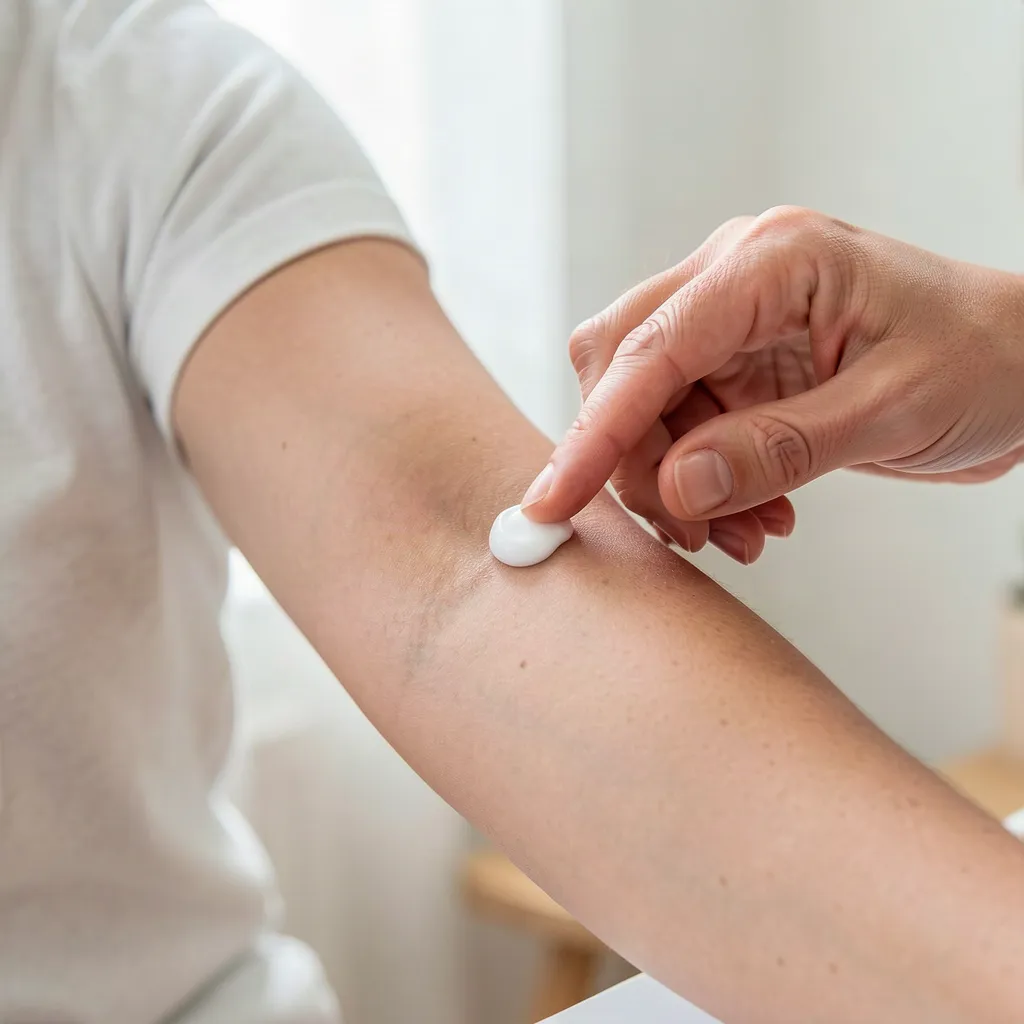
Patch-test the finished product on a small area as directed by the manufacturer. If tolerated, introduce it gradually and keep the rest of the routine stable. Use a gentle cleanser, a moisturizer that suits your skin and broad-spectrum sunscreen. Do not add several new acids, retinoids or spot treatments during the same week; otherwise irritation and benefit become difficult to interpret.
Stop if you develop persistent burning, swelling, hives, marked redness or a worsening rash. A sulfur-like smell can be a property of NAC, but a change in odour, colour or texture may also signal product degradation. Follow the storage instructions and do not use a product beyond its stated period after opening.
Pregnancy, breastfeeding, treatment of a child, extensive eczema, broken skin, active infection or prescription acne therapy are good reasons to ask a dermatologist or pharmacist before adding an unfamiliar active.
How to judge whether it is helping
Define one outcome before you start: fewer new comedones, fewer inflamed spots, less irritation or better tolerance of the overall routine. Take occasional photographs in similar lighting rather than judging the skin hour by hour.
Do not mistake tingling, tightness or peeling for proof that a product is working. For acne-prone skin, inflammation from an overloaded routine can create more redness and more post-inflammatory discoloration.
If the product has no clear benefit after the manufacturer’s suggested evaluation period, or if acne is worsening, reconsider it. An emerging ingredient does not deserve unlimited time simply because its mechanism sounds sophisticated.
The bottom line
Topical NAC is a scientifically interesting ingredient with limited but real human acne data. The early results justify more research; they do not yet justify calling NAC a proven cosmetic solution for problem skin.
For now, the quality of the finished formulation, the exact claim being made and the condition you are actually treating matter more than the ingredient’s antioxidant reputation. If you enjoy trying emerging skin-care technology, NAC can be approached as an optional, carefully monitored experiment—not as a substitute for established acne care.
Educational content only. This article is not medical advice and does not diagnose or treat a skin condition.
References
[1] Montes LF, Wilborn WH, Montes CM. Topical acne treatment with acetylcysteine: clinical and experimental effects. Skinmed. 2012;10(6):348–351. PMID: 23346662. https://pubmed.ncbi.nlm.nih.gov/23346662/
[2] Parvizi MM, et al. Comparative Efficacy of Topical N-Acetylcysteine-Doxycycline versus Benzoyl Peroxide-Doxycycline in Moderate Acne Vulgaris: An Add-on Double-Blind Randomized Controlled Trial. Dermatology Practical & Conceptual. 2026;16(2):6215. DOI: 10.5826/dpc.1602a6215. https://pubmed.ncbi.nlm.nih.gov/42190184/
[3] Janeczek M, et al. The Potential Uses of N-acetylcysteine in Dermatology: A Review. Journal of Clinical and Aesthetic Dermatology. 2019;12(5):20–26. PMCID: PMC6561714. https://pmc.ncbi.nlm.nih.gov/articles/PMC6561714/
[4] Picardo M, et al. Efficacy and safety of N-acetyl-GED-0507-34-LEVO gel in patients with moderate-to-severe facial acne vulgaris: a phase IIb randomized double-blind, vehicle-controlled trial. British Journal of Dermatology. 2022;187(4):507–514. DOI: 10.1111/bjd.21663. https://pubmed.ncbi.nlm.nih.gov/35553043/
[5] American Academy of Dermatology. Acne clinical guideline. Updated 2024. https://www.aad.org/member/clinical-quality/guidelines/acne
[6] Multi-Active Cosmeceutical Formulations: Stability, Sensory Performance, and Skin Tolerability. Cosmetics. 2025;12(5):195. https://www.mdpi.com/2079-9284/12/5/195