Menopause and Your Skin: What Changes, What Helps, and What Hormones Don’t Solve
An evidence-led guide to skin changes around menopause, what a simpler supportive routine can do, and why hormone therapy is not a skin-aging treatment.
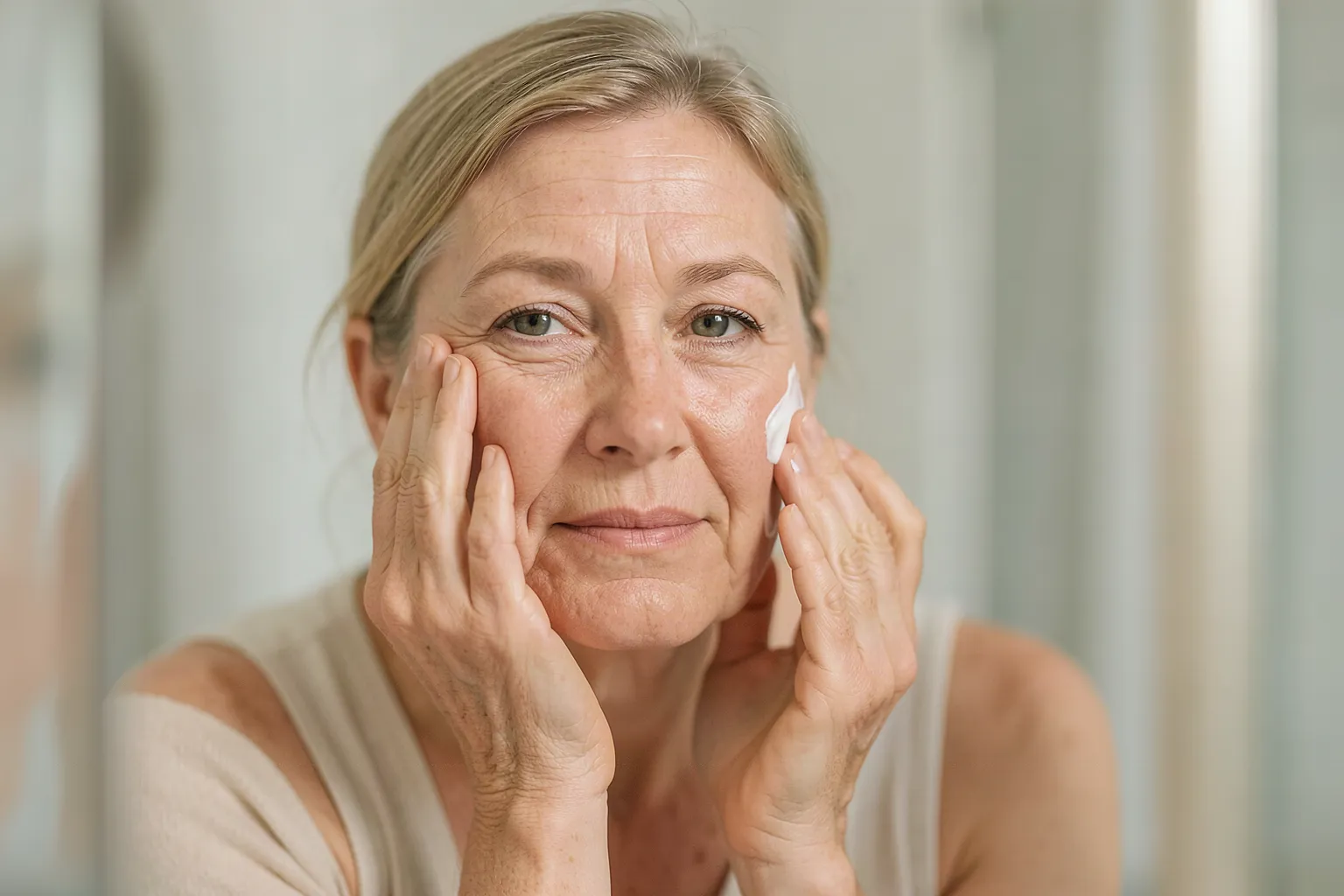
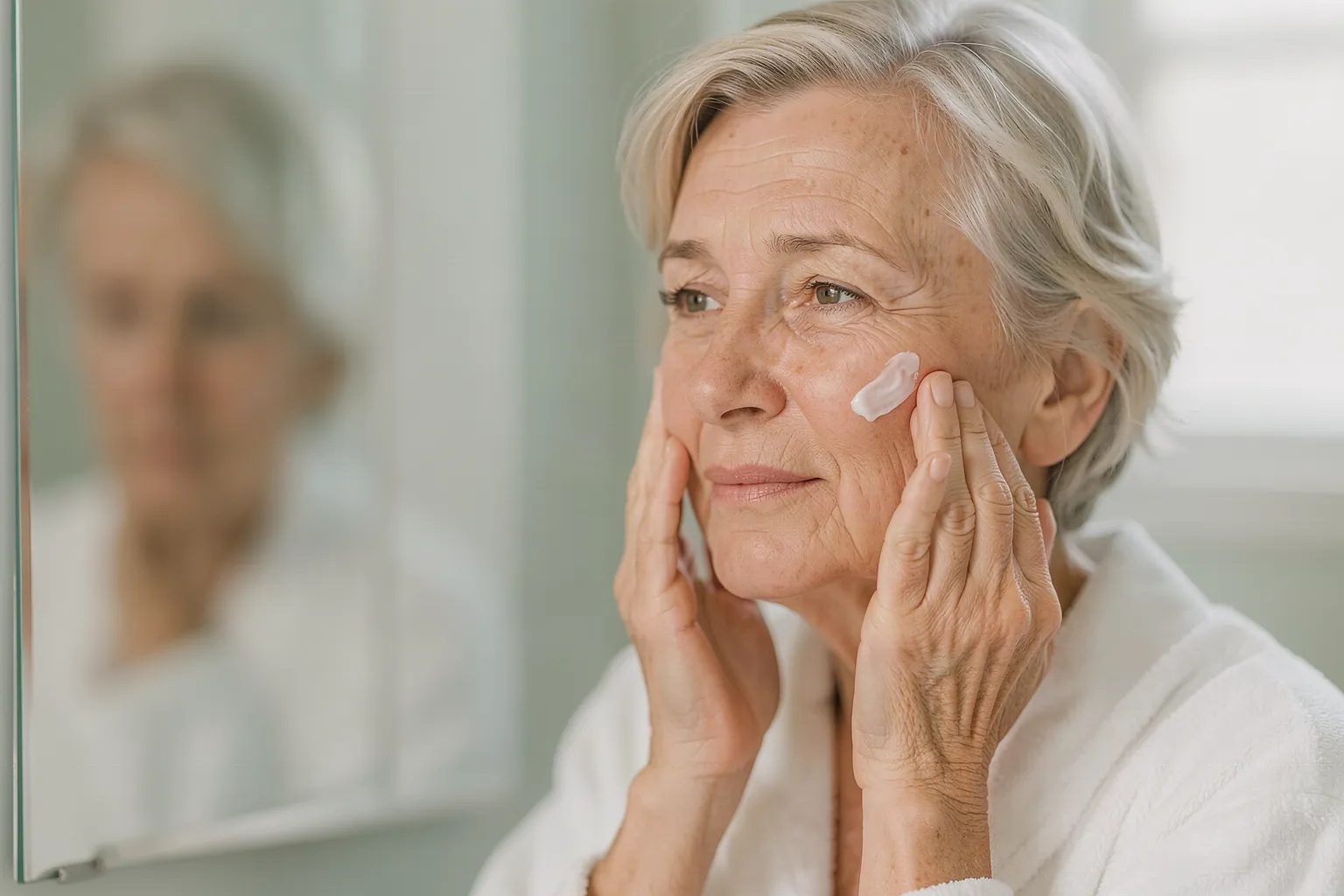
If your skin suddenly seems drier, less forgiving, or more reactive around menopause, you are not imagining the timing. Hormonal change can affect the skin.
It is also easy to blame every new line, patch of dryness, or change in texture on estrogen. Skin is aging at the same time, carrying decades of ultraviolet exposure, responding to climate and medications, and changing with your health. Menopause is part of that picture—not a single explanation for everything you see.
That distinction matters because the useful response is usually supportive rather than aggressive: reduce unnecessary irritation, replace lost moisture, protect from ultraviolet exposure, and be more selective about active ingredients.
What estrogen changes in skin
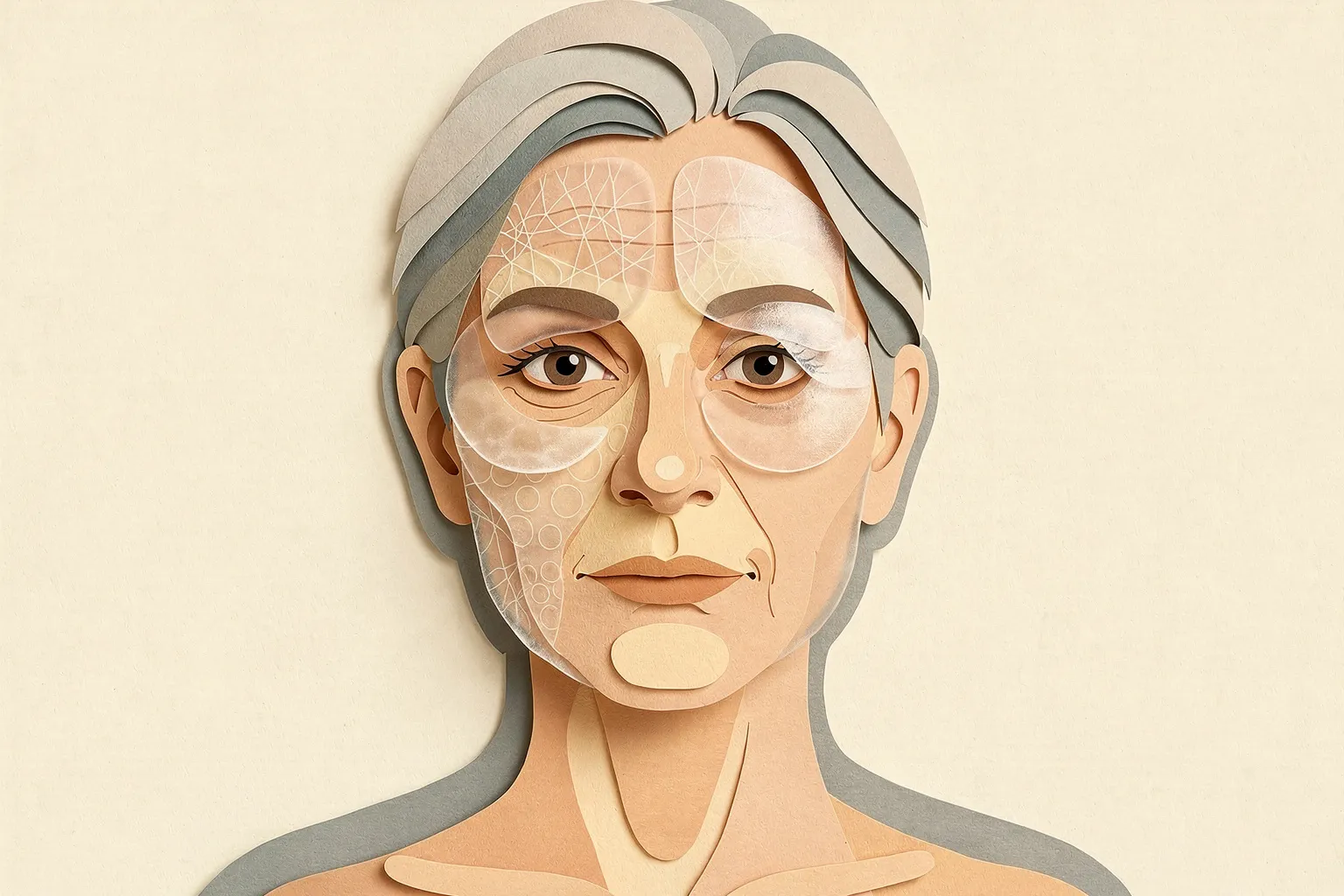
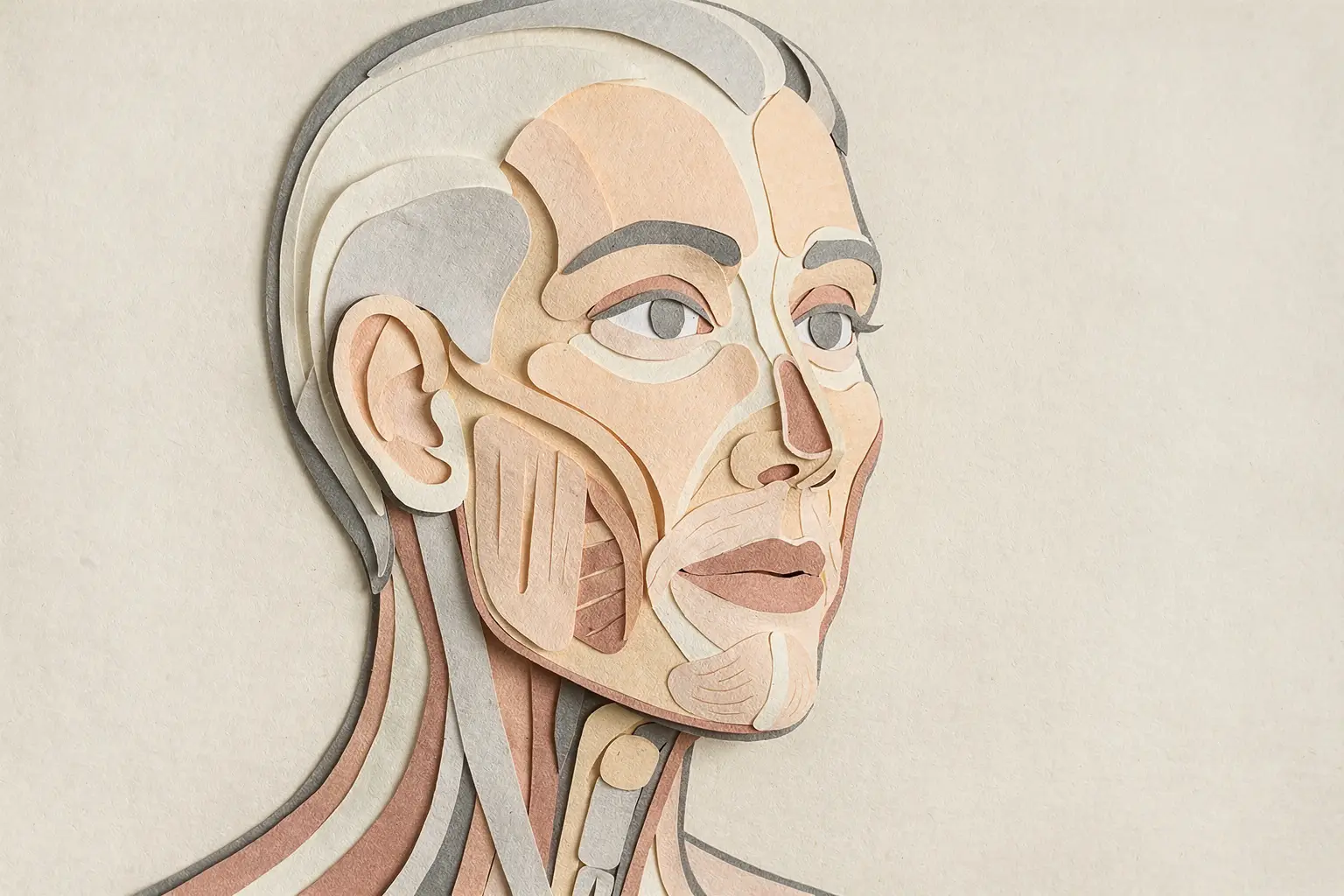
Skin contains estrogen receptors, and declining estrogen can influence several processes that affect how skin looks and feels. Reviews of menopausal skin describe changes in collagen, dermal thickness, elasticity, hydration, and sebum production across the menopause transition.
Those changes do not occur at the same rate in every person. Genetics, smoking, ultraviolet exposure, nutrition, medications, and underlying skin conditions all modify the picture.
This is why a single percentage about “collagen loss after menopause” can sound more precise than the evidence really is. The direction of change is well supported; the exact amount for one individual is not predictable from age or menopause status alone.
Dryness is common, but the barrier story is more complicated
Many people report more dryness around and after menopause. The American Academy of Dermatology recommends a mild cleanser and moisturizer because skin often becomes drier with age and hormonal change.
A 2025 study comparing reproductive-age and postmenopausal participants found lower skin hydration in the postmenopausal group. But transepidermal water loss—a measure often used as a proxy for barrier function—did not differ significantly between those groups.
That is a useful corrective to the idea that menopause simply makes the skin barrier “collapse.” Your skin can feel and measure drier without every barrier measure moving in the same direction. The practical response is still to support hydration and reduce irritation, but the biology is more nuanced than a before-and-after slogan.
A routine that usually needs less friction, not more products
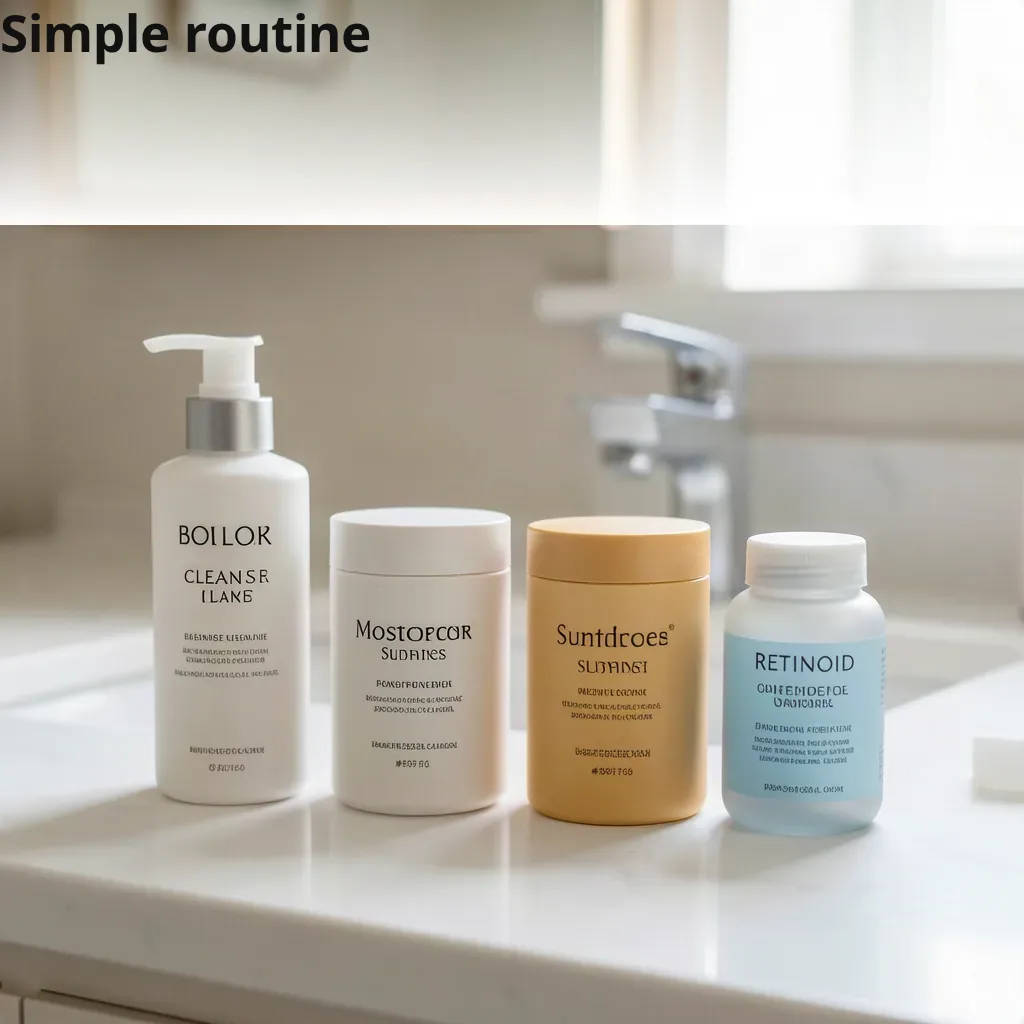
Start with the basics. Use a gentle cleanser if you need one, moisturize soon after washing, and use broad-spectrum SPF 30 or higher during the day. These steps are less glamorous than a menopause-specific serum, but they address dryness and cumulative ultraviolet exposure directly.
If your moisturizer no longer feels sufficient, look for a formula with humectants to hold water, emollients to smooth the spaces between skin cells, and an occlusive component to reduce water loss. You may simply need a richer texture than you preferred ten years ago.
Retinoids can improve fine lines and uneven texture over time, but they can also make dry or reactive skin more irritated. If you already tolerate one, there is no rule that menopause means you must stop. If you are starting from scratch—or your skin is stinging, peeling, or persistently red—your dermatologist can help you decide whether a retinoid belongs in the routine at all.
What skincare can and cannot change
A good moisturizer can make dry skin more comfortable and temporarily make fine lines look softer because hydrated skin reflects light differently and feels more supple. Sunscreen reduces additional ultraviolet damage. Retinoids and some other topical ingredients can influence collagen-related pathways over time.
None of those things restores skin to a premenopausal state. Creams cannot fully reverse structural laxity, replace lost facial volume, or make every hormone-related change disappear.
That does not make skincare pointless. It makes the goal clearer: improve comfort, support function, reduce avoidable damage, and choose targeted treatments for concerns that actually bother you.
What about hormone therapy for the skin?
Menopausal hormone therapy can affect skin biology. A 2023 systematic review and meta-analysis found improvements in measures including skin elasticity, thickness, and collagen content across the included studies, although effects on dryness were not clearly significant and the evidence base had important limitations.
That does not make hormone therapy a skincare treatment. The Menopause Society states that estrogen-containing hormone therapy is not recommended for the prevention of aging or skin changes. Decisions about systemic hormone therapy should be based on established menopause indications, your symptoms, medical history, and a clinician-guided discussion of benefits and risks.
If you are already considering hormone therapy for hot flashes, genitourinary symptoms, bone health, or another appropriate reason, skin effects can be part of the broader conversation. They should not be the sole reason to start it.
When a skin change deserves its own evaluation
Not every change that appears during menopause is caused by menopause. Persistent itching, a new or changing pigmented lesion, skin that bleeds without an obvious reason, a rash that does not settle, substantial hair loss, or acne and rosacea that are difficult to control deserve their own assessment.
A dermatologist can separate a common age- or hormone-associated change from a separate condition that needs treatment. That is especially useful when you find yourself adding more and more products without understanding what you are treating.
The most useful menopause routine is often not the one with the most hormone-themed products. It is the one built around the skin you actually have now.
The bottom line
Menopause can change the way skin holds water, produces oil, builds and maintains dermal structure, and tolerates a routine. But the changes are variable, and they overlap with ordinary aging and cumulative sun exposure.
A sensible response is usually simple: cleanse gently, moisturize more generously if you need to, protect from ultraviolet exposure, and use stronger active ingredients only to the degree your skin tolerates them.
Hormones are part of the biology. They are not a shortcut around it. Hormone therapy is a medical decision made for appropriate menopause indications—not a treatment to start solely because skin looks or feels older.
Sources
American Academy of Dermatology. Caring for your skin in menopause.
Treatment of menopausal skin: a narrative review. Clinical and Experimental Dermatology. 2024.
Skin Rejuvenation in Menopausal Women With Menopausal Hormone Therapy: A Systematic Review and Meta-Analysis. Dermatologic Surgery. 2024.
Menopause, Menstrual Cycle, and Skin Barrier Function. Journal of Cosmetic Dermatology. 2025.
The Menopause Society. Statement on misinformation surrounding hormone therapy. 2024.
Menopause and Common Dermatoses: A Systematic Review. 2026.