Exosome Skincare — Claims Lab
Biology first
Exosomes are real. Product equivalence is not.
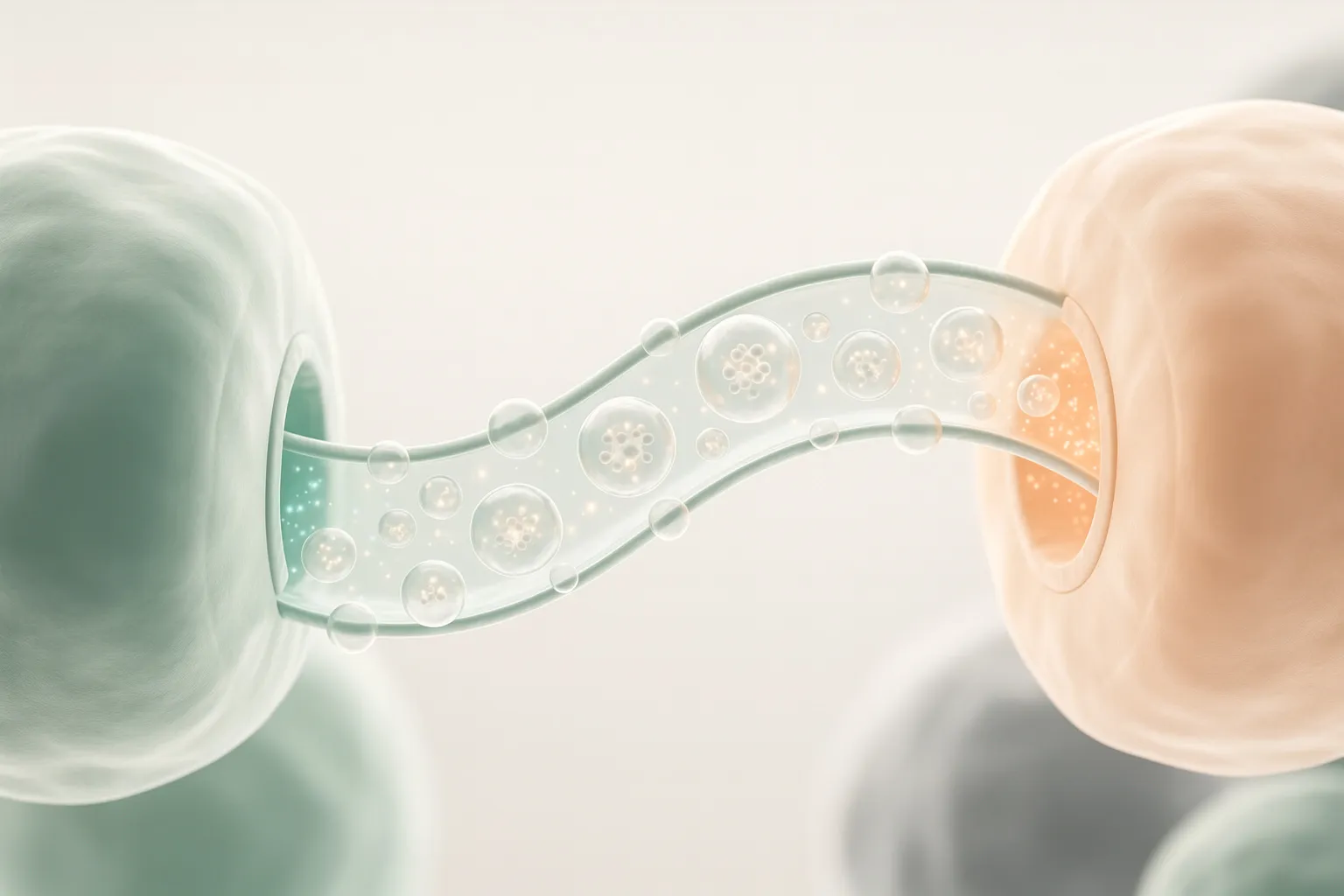
The hero uses a translucent 3D biomedical style rather than the publication’s normal photography. It makes the cell-to-cell concept visible without turning it into a promise about a serum.
Follow the claim
Four checkpoints before confidence
- 1
Source
What biological material is actually being described?
- 2
Characterize
How was the vesicle preparation identified and measured?
- 3
Formulate
What happens to it in the finished product and route of use?
- 4
Test
Does human evidence match the exact advertised outcome?
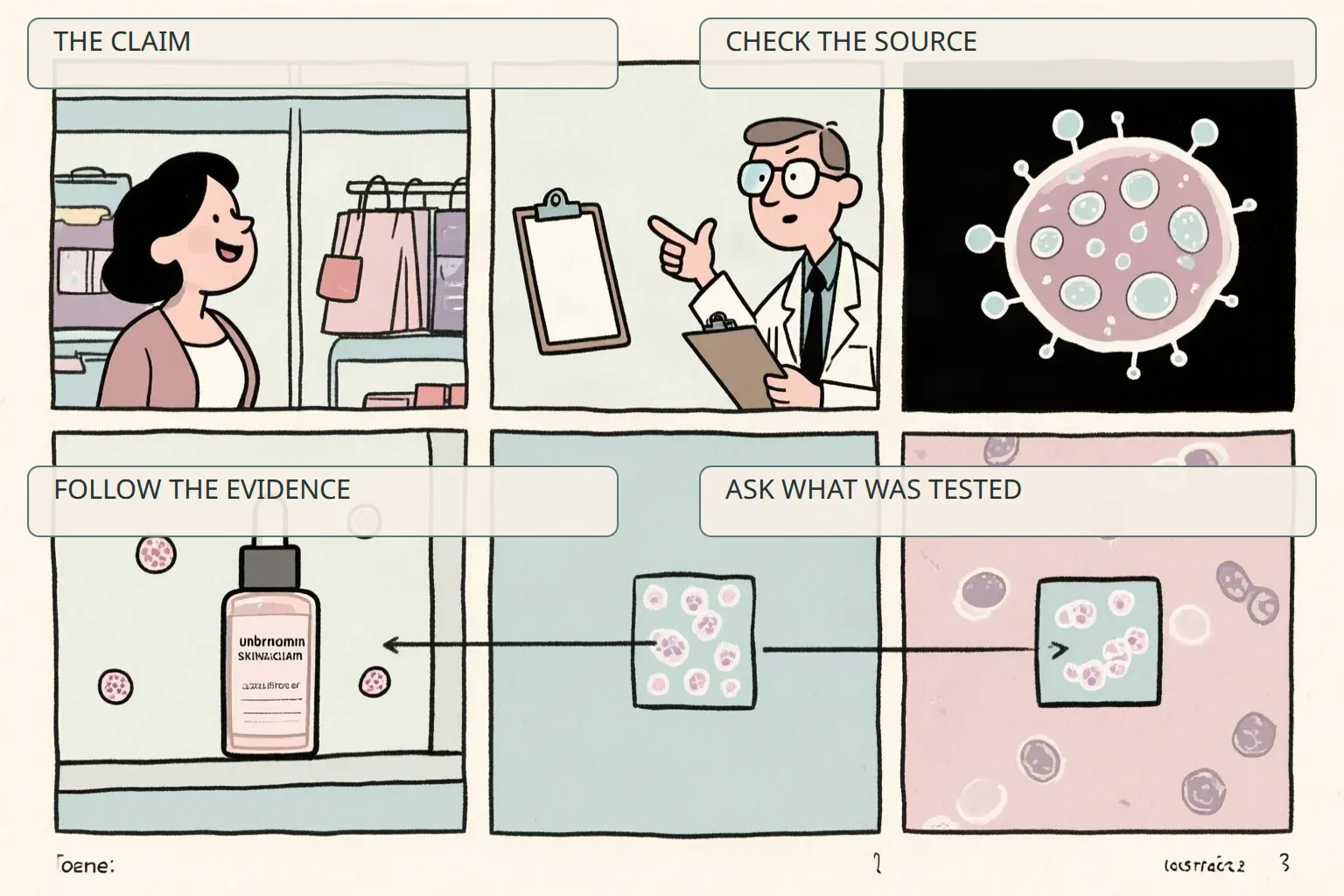
Comic explainer
A claim moves through four checkpoints
Route matters
Do not treat these as the same product class
| Topical cosmetic | Post-procedure | Injected use | |
|---|---|---|---|
| Exposure | Skin surface | Compromised/recovering skin | Tissue injection |
| Evidence bar | Finished-formula data | Procedure-specific data | Clinical safety + efficacy |
| Clinical oversight | Usually not required | Often relevant | Essential |
| Can borrow evidence? | No | No | No |
Three distinctions worth keeping
- Is an exosome the same as a stem cell?
No. Exosomes are extracellular vesicles released by cells. The terms belong to related research areas but are not interchangeable.
- Does laboratory activity prove a cosmetic result?
No. A mechanism can justify further study, but a finished product needs evidence that applies to that product and outcome.
- Is an injection just a stronger topical product?
No. It is a different route of exposure with a different safety and evidence threshold.
Route-of-use boundary
One word, different exposure
A topical cosmetic and an injected product should not inherit the same evidence or safety assumptions merely because both use the word “exosome.”
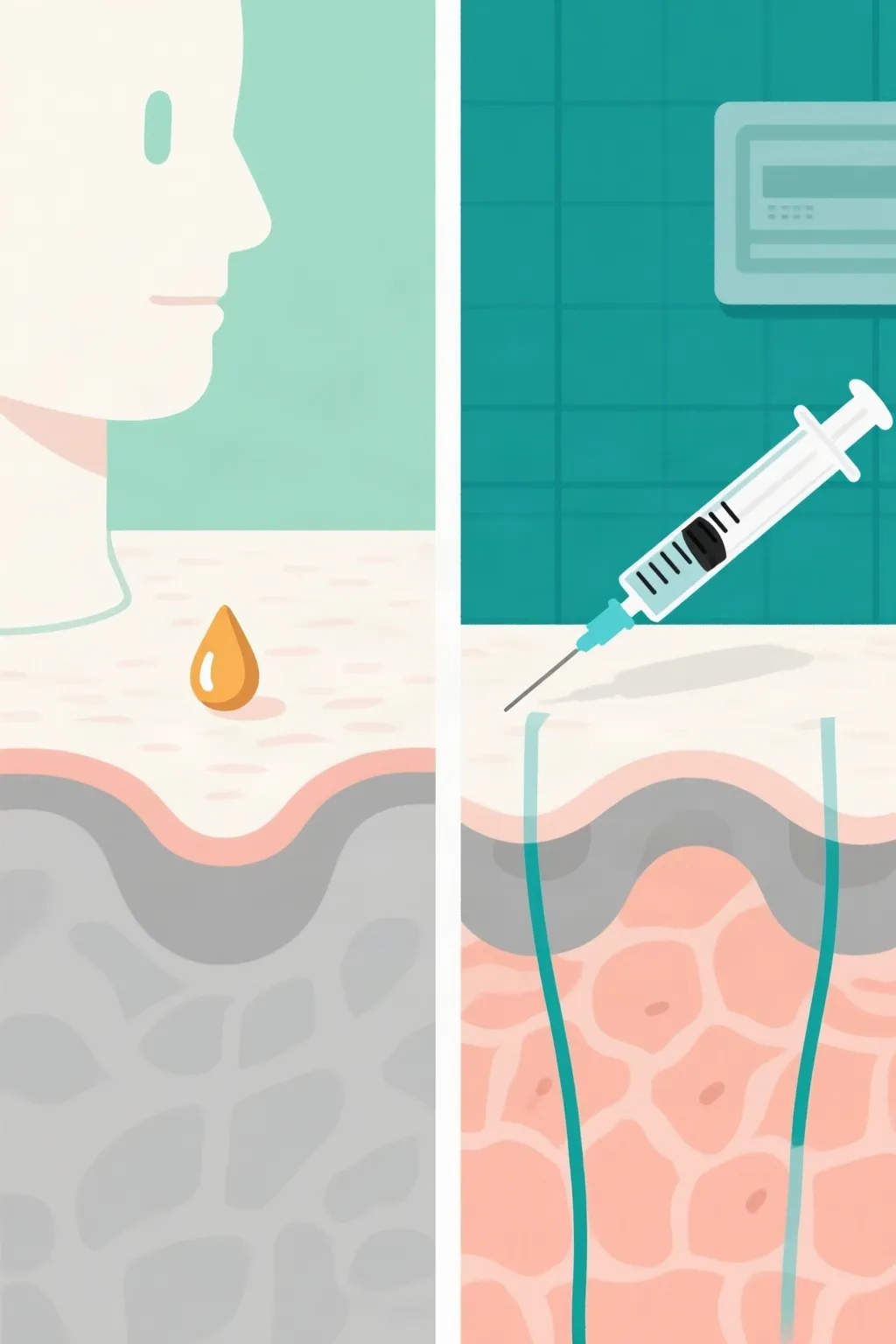
The route of exposure changes the safety question. For injections and procedure-associated products, the clinician and the specific product matter.