Azelaic Acid: What the Evidence Actually Shows
What azelaic acid is, what the evidence supports it for, who it suits, how people get it wrong, and how it interacts with the rest of a routine.
5 min read By Dr. Lurie ingredients #ingredients #acne #sensitive-skin #pigmentation #guides

Azelaic acid keeps turning up in recommendations. For acne. For the redness and bumps of rosacea. For the brown marks a spot leaves behind long after the spot has gone.
It is rarely the loudest product on a shelf, and part of the reason people hesitate is that nothing about it sounds impressive. There is no tingle, no visible peeling, no immediate glow.
It does have a real evidence base, a genuinely useful profile for skin that reacts to everything else, and one very specific way of disappointing people.
What it is
Azelaic acid is a dicarboxylic acid produced by a yeast that lives on normal skin. It is used topically, not taken by mouth.
Prescription strengths in most countries are a 15% gel or a 20% cream, depending on the licensed indication. Lower concentrations, commonly around 10%, are sold without a prescription. Availability and licensing differ from country to country, so what sits on a pharmacy shelf where you live may not match what a study used.
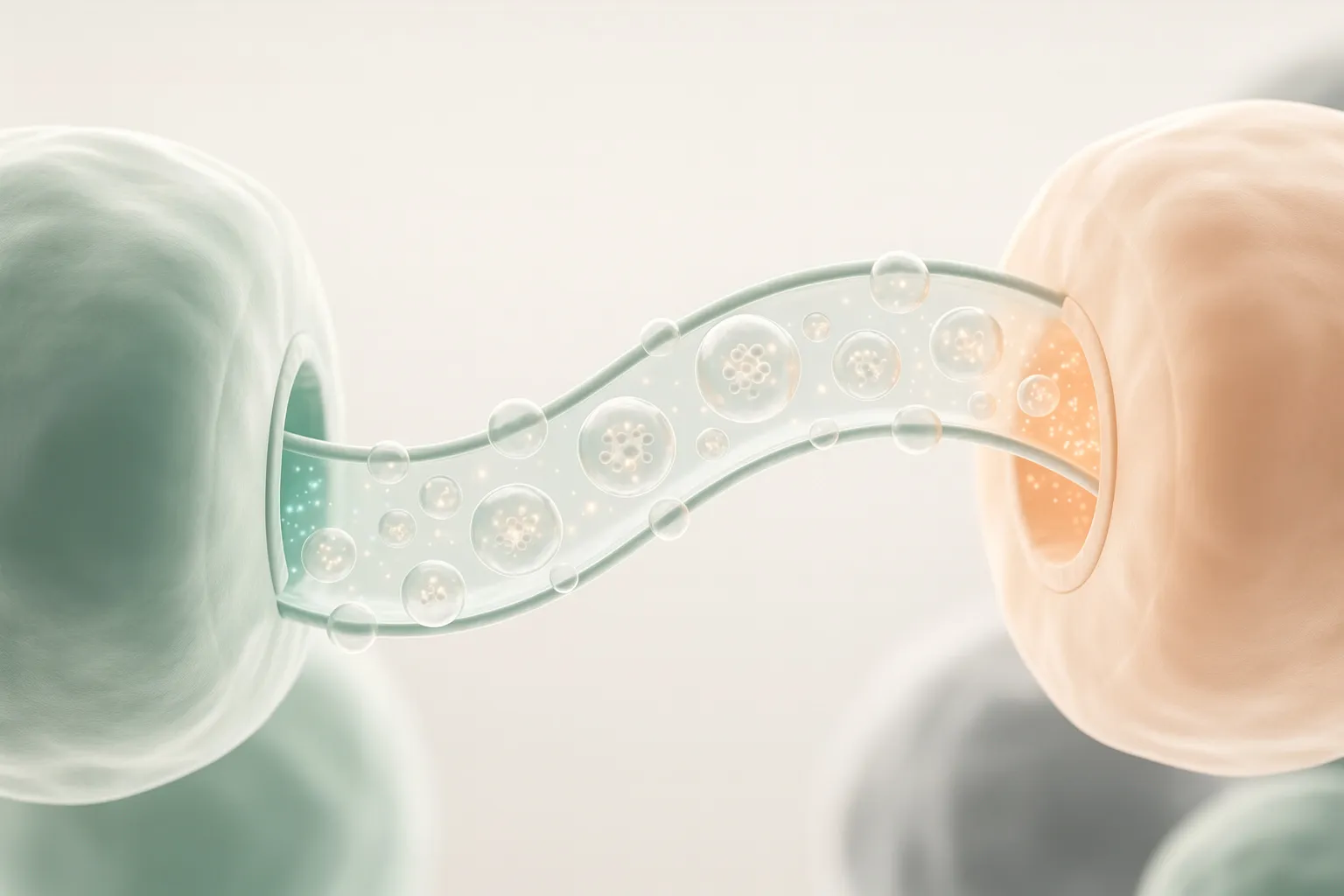
DermNet describes three mechanisms at work. It reduces the growth of bacteria in the follicle by interfering with protein synthesis. It improves the abnormal way cells build up inside the follicle. And it damps inflammation by scavenging free radicals in immune cells.
That combination is why one ingredient turns up against several different-looking problems.
What the evidence shows
Acne. Topical azelaic acid appears in the 2024 American Academy of Dermatology acne guideline among the topical treatments it recommends. It acts on both blocked pores and inflamed spots, which is unusual for a single ingredient. Its evidence base in acne is smaller than the one behind benzoyl peroxide or a topical retinoid.
Rosacea. The 15% gel is one of the better-supported topical options for the papules and pustules of rosacea. It does less for flushing and visible vessels, which are a different problem with different answers.
Marks left behind. Because it acts on pigment production as well as on inflammation, DermNet notes it is particularly useful for people with deeper skin tones whose spots leave persistent brown marks.
Melasma. A 2023 systematic review in the Journal of Cosmetic Dermatology looked across acne, rosacea, melasma and skin ageing. Support was clearest in acne and rosacea; results in melasma were less consistent.
Studies suggest a reliable mid-tier active: better evidenced than most of what is marketed beside it, and not a replacement for a treatment your clinician has prescribed.
Who it suits
It tends to suit:
skin that reacts badly to benzoyl peroxide or a retinoid, since irritation from azelaic acid is usually milder
acne that leaves brown marks rather than red ones
mild to moderate papulopustular rosacea
people who would rather have one product doing two jobs than a stacked routine
It also does not bleach fabric, which benzoyl peroxide does, and in most people it is well tolerated.
On pregnancy: azelaic acid is often mentioned among the acne options considered acceptable during pregnancy. That is exactly the kind of decision to make with the clinician looking after your pregnancy, not from an article. Do not start, stop, or continue any active on the strength of a web page while you are pregnant or breastfeeding.
How people get it wrong
Stopping too early. DermNet's guidance is that some improvement should be seen after about a month, with maximum results after around six months of continuous use, and that rosacea may need up to twelve weeks before it is fair to judge. Most people who say it did nothing stopped at four.
Expecting an exfoliant. It is called an acid and it does not behave like one. No tingle, no peel, no overnight difference. The change is slow and cumulative, which makes comparison over weeks more useful than checking the mirror daily.
Using too much. A thin layer over the whole affected area, once or twice daily, is the pattern the studies used. More does not speed it up; it mostly increases the chance of stinging.
Adding it to everything at once. Layered onto a retinoid, an acid toner and a foaming cleanser in the same week, it will get the blame for irritation the routine as a whole caused.
Interactions and side effects
Mild stinging, dryness, or a temporary itch in the first weeks is common and usually settles. DermNet advises stopping if you get severe redness, scaling, itching or burning.
It layers reasonably with niacinamide and with most moisturisers. Combining it with a retinoid is done, but introduce one thing at a time, a fortnight apart, so you can tell which one your skin is answering.
Worsening of asthma has been reported with azelaic acid. If you have asthma, say so before you start.
And if what you are treating is rosacea, acne that is leaving scars, or pigmentation you are not sure about, your dermatologist is the sensible first step rather than the last resort. Individual response varies more than any article can account for.
The short version
Azelaic acid is an unglamorous, reasonably well-evidenced ingredient that suits reactive skin and post-spot marks better than most of the alternatives. It asks for about three months of patience and a boring routine around it.
If that sounds like an anticlimax, it is meant to. Most of what works on skin works slowly.
Take the guide with you
A five-page illustrated guide: what it is, where the evidence is clearest, what happens inside the follicle, the twelve-week timeline, and the four mistakes that make people stop early. Laid out to save or print.
Sources
Azelaic acid: uses, application and more. DermNet. dermnetnz.org/topics/azelaic-acid
A systematic review to evaluate the efficacy of azelaic acid in the management of acne, rosacea, melasma and skin aging. Journal of Cosmetic Dermatology. 2023. onlinelibrary.wiley.com/doi/10.1111/jocd.15923
Guidelines of care for the management of acne vulgaris. Journal of the American Academy of Dermatology. 2024. jaad.org/article/S0190-9622(23)03389-3/fulltext
Azelaic Acid: Evidence-based Update on Mechanism of Action and Clinical Application. 2015. pubmed.ncbi.nlm.nih.gov/26355614